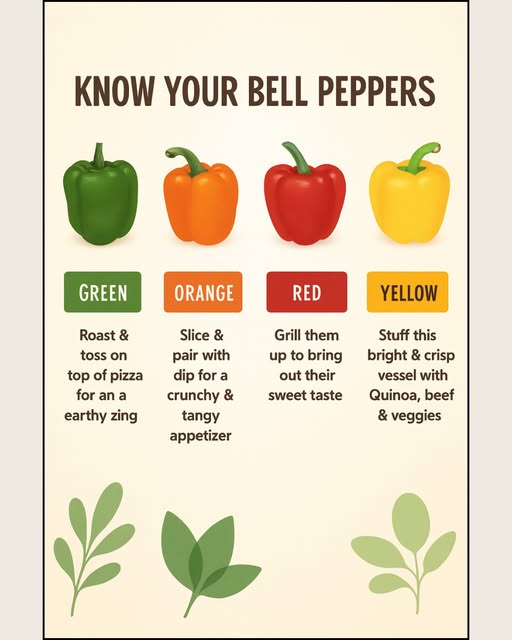
Bell peppers aren’t just colorful veggies to make your plate look pretty—they’re packed with flavor and nutrients that can boost your meals and health. Whether you’re cooking stir-fries, salads, or snacks, knowing which pepper color to use can make your dishes tastier and more nutritious. Let’s explore how each color brings something special to the table!
What Makes Each Bell Pepper Color Unique
Bell peppers change color as they ripen, and each stage offers different tastes and textures. Green peppers are picked early, so they’re crisp and slightly bitter. Red peppers are fully ripe, sweeter, and softer. Yellow and orange peppers are in-between—mildly sweet with a fruity touch. Rare purple peppers have a subtle earthiness but lose their color when cooked. The longer they stay on the plant, the sweeter and more nutrient-rich they become.
Why Bell Peppers Are Good for You
All bell peppers are low in calories and high in vitamins C and A, which support your immune system and eye health. Red peppers have the most vitamin C—almost twice as much as green ones! Yellow peppers are rich in lutein for healthy eyes, while orange peppers pack beta-carotene. Purple peppers contain anthocyanins, antioxidants that fight inflammation. Mixing colors in meals ensures you get a variety of nutrients.
Bell Pepper Colors and Their Best Uses
| Color | Flavor | Best For |
|---|---|---|
| Green | Crisp, slightly bitter | Stir-fries, stuffed peppers, salsa |
| Red | Sweet, juicy | Roasting, salads, sandwiches |
| Yellow | Mild, fruity | Grilling, kebabs, pasta dishes |
| Orange | Sweet, tangy | Dips, soups, raw snacks |
| Purple | Earthy, mild | Raw salads, garnishes (cook sparingly) |
How to Add Bell Peppers to Your Meals
- Raw Snacking: Slice red or yellow peppers and dip them in hummus.
- Stir-Fries: Toss green peppers into hot dishes for crunch.
- Roasting: Char red peppers over a flame for smoky sauces or soups.
- Stuffed Peppers: Fill hollowed-out peppers with rice, meat, or beans and bake.
- Salads: Mix colorful slices with leafy greens for extra crunch and sweetness.
Remember
Bell peppers are generally safe, but some people might find them hard to digest raw. Cooking softens them and makes nutrients easier to absorb. If you have a nightshade allergy (rare), avoid peppers. Always wash them thoroughly to remove pesticides. If you’re unsure how peppers fit into your diet—especially if you have digestive issues—ask a doctor or nutritionist for advice.